
Racism Is Pain - Expressed Poorly and Reinforced Systemically
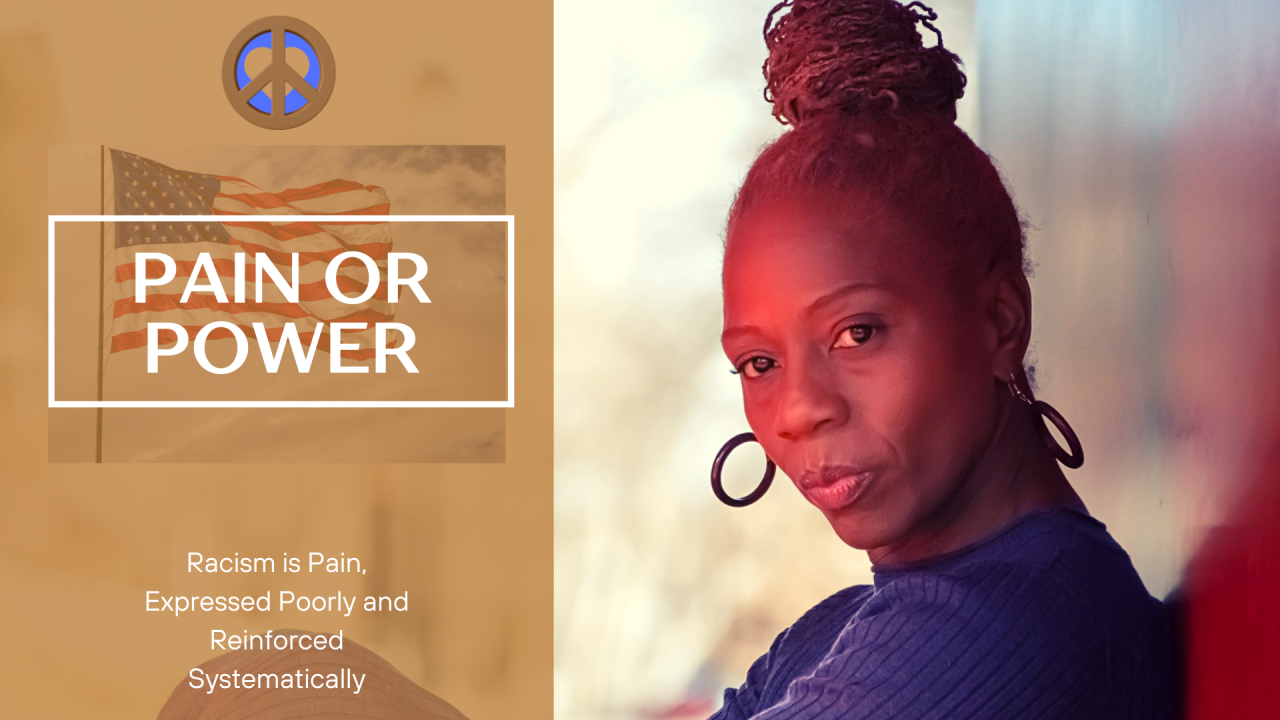
Recently, I have come across some deeply disturbing racist comments on social media.
It still catches me off guard. Not because I’m naïve, but because I refuse to normalize racism in my mind.
I’ve spent most of my adult life living and working in diverse communities. I know what it looks like when people coexist with respect. I know that harmony is possible. So when I see blatant racism, I don’t accept it as “just how people are.” I see it for what it is. Pain.
Pain Unveiled
As a psychologist, I understand that people reveal how they feel about themselves in many ways. One of the clearest is how they treat those who are different from them. No one who feels good on the inside treats others poorly.
Racism, at its core, is bullying.
It is the misuse of power, whether social, positional, or psychological, to diminish someone else. And bullying, in any form, is never a reflection of strength.
It is a reflection of pain - not processed - not acknowledged - not understood. But projected. That’s not a feeling of superiority. Quite the contrary. That’s the pain of fragility.
Naming the Pain
There is the pain of identity, which is difficult to examine when it has been inherited.
Beliefs about race, worth, intelligence, and belonging are absorbed early and left unchallenged. When those beliefs are questioned, it doesn’t feel like an idea is being examined. It feels like the self is being threatened.
When someone has tied their value to status, comparison, or hierarchy, equality can feel unreasonable. If worth has always been measured by being “above,” then the idea of being equal can register as feeling “less.”
Fear
The pain of fear is rarely named. It is almost always defended: fear of being displaced, fear of losing relevance, fear of not knowing how to exist in a world that no longer centers you.
The fear of being displaced means position must be protected; fear of losing position means access must be dominated; and fear of losing relevance means others must be diminished.
And when there is emotional underdevelopment, when someone has never learned how to sit with discomfort, contradiction, or change, that fear hardens. Unexamined fear looks for control.
So instead of expanding, racists defend. Instead of questioning, they double down. Instead of learning, they reject.
Exposure
Exposure creates another layer of pain. When what was once invisible becomes visible, it can feel like accusation even when it is simply awareness. Privilege that masqueraded as potential is not easy to release.
What follows is often resistance. Accountability is mistaken for loss, and false narratives replace meaningful dialogue. Because once something is seen, it requires a response. The difficulty is not just in releasing the advantage, but in reconstructing a sense of self that is no longer dependent on it.
Unprocessed Pain
What happens when this pain goes unprocessed? Well, pain looks for the easiest path, one where it can remain both expressed and invisible.
It shows up in social media engagement that dehumanizes.
It shows up in resistance to progress that feels justified.
It turns into defensiveness disguised as logic.
It turns into exclusion disguised as standards.
It turns into hostility disguised as honesty.
Because projection is easier than introspection. It is easier to assign inferiority to someone else than to confront instability within yourself. It is easier to protect an identity than to rebuild one.
From 1962
I was born in 1962, less than a decade after Brown v. Board of Education, the decision that ended legal school segregation. I have experienced more racism in my lifetime than I ever care to revisit.
I have also witnessed more harmony, compassion, and social progress than my grandmother ever thought possible, and more than my mother fought to make real. I am writing this piece to remind me of those moments.
I remind myself that what I’ve seen of racism, harm and division at its worst is not the full story.
I remind myself that people are capable of more than what individuals sometimes show.
I remind myself that progress, while uneven, is real.
And I remain clear about this: I will not normalize racism and division in order to make sense of it.
I can understand where it comes from without accepting it. I can name the pain without carrying it. I can see the fragility without shrinking in response to it.
The standard is not what has been. The standard is what we now know is possible.